The tale of life on Earth has been unfolding for about 4 billion years.
And we humans are just the last word on the last page of that story.
At least so far.
And the vast stretches of time that are covered by the history of life can be hard for us
to fathom.
We wrack our brains just trying to imagine what a few hundred years looks like, let alone
billions of years
And, like, speaking for myself, I can't even remember what I had for breakfast this
morning.
So, to help us comprehend the full expanse of time, scientists have turned to the rocks.
By looking at the layers beneath our feet, geologists have been able to identify and
describe crucial episodes in life's history -- from bursts of evolutionary diversity to
disastrous extinction events.
These key events -- of new life and sudden death -- frame the chapters in the story of
life on earth.
And the system we use to bind all these chapters together is the Geologic Time Scale.
First, let's talk about the history of geologic time itself.
'Cause figuring out how to read history in rocks was not easy.
For much of human history, of course, we had no idea how old the Earth was, or what actually
happened in deep time, or what happened in what order.
But in 1669, Danish scientist Nicolas Steno published the first laws of stratigraphy -- the
science of interpreting the strata, or layers of rock, in Earth's outer surface.
Steno argued that the layers closer to the surface must be younger than the layers below
them.
So the farther down you dig, he thought, the older the fossils are that you find there.
Sounds legit, right?
But in Steno's day -- when some people thought that fossils had literally fallen from the
sky, for some reason -- this was pretty revolutionary idea.
Building on Steno's ideas, Italian geologist Giovanni Arduino went a step further and began
naming the layers of rock.
In the 1760s, Arduino studied the Italian Alps, organizing their layers based on their
depth and composition.
The lowest layers of metamorphic and volcanic rocks, he called the Primary layer.
Above those were hard sedimentary rocks which he called Secondary.
And the top layers of softer alluvial deposits he named Tertiary and Quaternary.
But, because rock layers don't appear in this same order all over the world, there
was no way for geologists to compare rocks from one location to another.
Without a way to compare strata, there could be no universal time scale.
Finally, in 1819, English geologist William Smith figured out the solution to this problem:
fossils.
By comparing the remains of ancient organisms from different rock formations, Smith could
match their ages, regardless of how far apart they were.
For example, Smith realized that fossils of many early species of trilobites are found
below ammonite fossils, which are in turn below certain species of shellfish.
So, anyplace in the world where you find these first trilobites, you know that you're looking
at rock that's older than when ammonites lived.
And even in the most ancient rocks, that have little or no evidence of life, scientists
can still look for signs of the very earliest major geologic events, like when
continents first formed, and even when the Earth itself cooled and solidified.
Thanks to the work of early geologists like Steno, Arduino, and Smith, modern scientists
have used these and other clues to create what we now call the Geologic Time Scale,
or GTS.
The GTS has been reworked many times to reflect the latest knowledge of Earth's history.
And today, it's organized into five subgroups: Eons, Eras, Periods, Epochs
and Ages.
Organizing time in increments like this allows us to ask questions about history on different
scales.
In the largest increments -- like Eons and Eras -- we can ask the biggest of big-picture
questions.
Like, was there life on Earth at this time?
If there was, what did it look like?
Did it live in the water or on land?
This is the kind of top-level view we're gonna take today.
But the smaller increments of time, like Periods and Epochs, help us take a tighter focus and
ask more specific questions.
Like, what was the climate like during this window of a few million years?
And how did life around the world adapt to it?
We'll be talking about those in more detail in future episodes, when we talk about each
era, period by period.
OK!
So, let's get the biggest of Big Picture views of Earth's history right now, by taking
a tour of all the Eons and Eras in the GTS.
Eons are the largest slices of time, ranging from a half-billion to nearly 2 billion years
long.
And the earliest Eon is known as the Hadean.
It begins with the very formation of the Earth itself, around 4.6 billion years ago and ends
4 billion years ago.
And this is the only Eon that doesn't have fossils.
Because, back then, the world was just … hell.
Named after the Greek underworld Hades, the Hadean lived up to its name.
The planet was wracked by volcanic activity, cosmic bombardments, raging storms, and temperatures
that were at times hot enough to melt rock.
But even in this searing wasteland, life may have been able to form.
While no fossils have been found from this Eon, small amounts of organic carbon have
been discovered in Hadean rocks that some experts think is evidence of the earliest
life.
These first organisms were tiny and single celled, but they were eventually able to shape
the future of the entire planet, so their appearance is the one major benchmark of this
Eon.
The Hadean was brought to an end by the cooling of the Earth's crust, setting the stage
for continents to eventually form.
And this cooling marked the beginning of the next phase -- the Archean Eon, which ran from
4 billion to 2.5 billion years ago.
Named for the Greek word for 'origin', the Archean was once thought to be when the
first signs of life appeared.
But at the very least, it's fair to say it was the first time that life flourished,
forming mats of microbes in the primordial seas.
The fossils that these microbes left behind are called stromatolites, or sometimes, stromatoliths,
and the very oldest of them -- like those found in western Australia -- date from the
Archaean.
During this time, the atmosphere was mostly carbon dioxide, but the appearance of cyanobacteria
was about to change all that.
Then 2.5 billion years ago, the Archean gave way to the Proterozoic Eon, meaning 'earlier
life'.
And around this time, photosynthetic bacteria, along with some multicellular forms of life,
spewed tons of oxygen into the atmosphere.
This probably wiped out much of the anaerobic life on Earth.
BUT!
It cleared the path for crucial, new organisms, including the ancestral Eukaryotes, whose
cells each have a nucleus and organelles wrapped up in membranes.
Eukaryotes developed into the first really big, complex, and sometimes kinda weird forms
of life, like the frond-like Charnia and the plate-shaped Dickinsonia.
These new, larger organisms quickly diversified, and by 541 million years ago, we were at the
doorstep of the next and current eon, the Phanerozoic.
Its name means 'visible life,' and the Phanerozoic was when life really became … obvious.
This is the eon that's home to trees, dinosaurs, newts, aardvarks, and humans.
Basically, life as we know it.
Hoo!
How are you holding up? You doing OK?
We've covered about three and half billion years already!
Just got another half billion to go and then we're home free
OK, now, from here, it's best to explore the Phanerozoic Eon through its Eras, the
next level down in the divisions of time.
This'll let us explore more recent history in greater detail.
The first era of our current eon is the Paleozoic Era, which began 541 million years ago.
This chapter was defined by the diversification of visible life, and it started with a bang.
Actually, an explosion!
The Cambrian explosion.
This flurorescence of diversity and complexity in the world's oceans is such a huge deal
in the history of life that all of the eons that came before it -- the Hadean, Archean,
and the Proterozoic -- are collectively known as the Precambrian.
At the start of the Paleozoic, over about 25 million years, the fossil record suddenly
reveals the appearance of complex animals with mineralized remains.
Y'know, hard parts -- shells, exoskeletons, that kind of thing.
And the first of these new animals to become truly widespread were the trilobites.
They were so common all over the world that they've been used as index fossils for the
Palaeozoic Era for centuries, ever since the days of William Smith.
But the trilobites soon had competition.
Fish developed teeth and jaws, and came to dominate the seas, including the first sharks
and armored giants known as placoderms.
Meanwhile, the land, which had been barren since the formation of continents back in
the Archean, was finally being populated -- first by plants and then by arthropods.
By 370 million years ago entire ecosystems had developed on the primeval continents.
Soon after, the earliest amphibians evolved and hauled themselves out of the water, leaving
the first vertebrate footprints in the mud.
299 million years ago, the supercontinent Pangea had formed, with an enormous desert
at its center.
This desert was quickly populated by the ancestors of what would eventually become reptiles and
mammals, which could thrive in dry conditions, unlike amphibians.
But this time of incredible growth couldn't last forever.
and instead, the Palaeozoic Era ended in cataclysm.
252 million years ago, 70% of land vertebrates and 96% of marine species disappeared from
the fossil record, including survivors of previous extinctions, like our friends the trilobites.
I still miss those guys.
The event, known as the Great Dying, was the most severe extinction in our planet's history.
But its exact cause is still unclear.
A possible meteorite impact site off the coast of South AmericaIslands,
might be one clue.
And in Siberia, layers of basalt show that massive volcanic eruptions covered large swaths
of Pangea in lava.
Both of these incidents coincided with the end of the Palaeozoic, and it seems more than
likely that the extinction had many causes.
In any case, the Palaeozoic may have begun as a chapter defined by an explosion of life,
but it ended in nearly absolute death.
It took millions of years for life to recover, but when it did, a new world, The Mesozoic
Era, had arrived.
This is often called the Age of Reptiles, and with good reason.
Right from the start of the Mesozoic, reptiles were incredibly successful.
This is when they took some of their most famous forms, including dinosaurs, pterosaurs,
and a variety of marine species.
In fact, all of the non-avian dinosaurs lived only in the Mesozoic, so they remain one of
the best index fossils of this era.
And many modern groups of organisms also evolved in the shadow of the reptiles, like
mammals frogs, bees, and flowering plants.
But the Mesozoic Era came to an end 66 million years ago, with yet another episode of devastation,
known as the Cretaceous-Paleogene, or K-Pg, Extinction Event.
Like all mass die-offs, the K-Pg had many causes, but probably the biggest of them was
a gigantic asteroid that struck the earth, sending out enormous amounts of ash into the
atmosphere, blocking out sunlight, and creating a vicious cold snap across the planet.
Without the sun's energy, entire plant communities died, and the animals that relied on those
plants perished with them.
Evidence of this impact can be found in a layer of iridium, in rocks dating to the end
of the Mesozoic.
Iridium is an element that's rare on Earth, but very common in asteroids and comets.
And a giant impact crater in the Gulf of Mexico, whose age matches the date of this extinction
has become the smoking gun for the asteroid hypothesis.
The victims of the K-Pg Extinction were some of the biggest reptiles of the land, sea and
sky, including all of what we NOW call the non-avian dinosaurs.
Birds survived the cataclysm, of course, making them the last surviving lineage of the dinosaurs.
Ok we have 66 million years to go and
that's the last major extinction event that we have to
talk about. I thought you might want to
freshen up so I bought these
pre-moistened toilettes
just going to
you have
some Iridium
Here. On this side.
On your forehead. Other side.
With all of the great reptiles gone, the smaller animals that remained were able to eke out
a living in the next era, the Cenozoic.
This is our era, in more ways than one.
It's the era that we're in today, and it also marks the rise of the mammals.
Soon after the K-Pg extinction, the climate warmed, and jungles stretched across the planet.
Mammals quickly recovered in this hothouse world, and by 40 million years ago, most of
the mammal groups that we recognize had come about, like whales, bats, rodents and primates.
But, starting 34 million years ago, the climate began to shift again.
This time Ice caps started to grow at the poles, taking up much of the planet's water.
And these drier conditions created a new habitat, the grassland, where ancestral horses and
antelope were first hunted by the earliest cats and dogs.
It was also on these grassy plains 7 million years ago that a species of ape known as Sahelanthropus
became the first known primate to walk upright.
2.6 million years ago, the ice caps expanded even more, and the Earth entered a glacial period.
This is the one you hear referred to as The Ice Age.
Over the course of these last several million years, most modern lifeforms that we know
about developed and thrived, alongside giants like mammoths, ground sloths and saber-toothed
cats.
Once again, though, this era of lush diversity came to a morbid end: Starting around 15,000
years ago, the climate began to warm up.
And over the next few thousand years, many of the giant fauna went extinct.
By 11,700 years ago, the last major glaciation was over, and modern humans inhabited nearly
all corners of the globe.
But how big a role we played in the extinction of the so-called Ice Age megafauna is hotly
debated.
Regardless, there's no escaping the fact that our species has shaped the Earth to its
will since then.
Like cyanobacteria, and the dinosaurs before us, we've had a huge impact on habitats,
other organisms, and the biosphere itself.
And as we've learned today, it's the most dominant forms of life that define each phase
of deep time.
So, even though our time on this planet amounts to the last word on the last page of the story
of life, we are the authors of the next chapter.
One day, the epoch of humans may be detected by the marks we made on the land, the traces
of our cities and farms.
And our very bodies will be the index fossils of this time.
No matter how our chapter ends up, we get to be characters in a truly amazing story.
Thanks for joining me for this epic -- or ee pok -- journey through geologic time.
Now, what do you want to know about the story of life on Earth?
Let us know in the comments.
And don't forget to go to youtube.com/eons and subscribe!
And the fun doesn't end here!
Do yourself a favor and check out some of our sister channels from PBS Digital Studios.

 For more infomation >> CARS Lightning Mcqueen Disney pixar cars Mack Truck Trailer M&M's Cars 3 Toys. 30 min Compilation! - Duration: 44:17.
  For more infomation >> Search for suspects in arcade shooting in West Palm Beach - Duration: 0:36.
  For more infomation >> NWS preliminary data shows 4 Sunday tornadoes in southern Indiana - Duration: 1:15.
  For more infomation >> Woman accused of selling heroin out of school van - Duration: 1:52.
  For more infomation >> Melania Trump Asia tour: Melania Trump embraced by Japanese students, practices calligraphy - Duration: 3:29.
  For more infomation >> Un milagro salvó a este chofer de morir calcinado | Al Rojo Vivo | Telemundo - Duration: 0:34.
  For more infomation >> Video: Robert W. Coleman Elementary starts their day with positive energy - Duration: 2:56.
 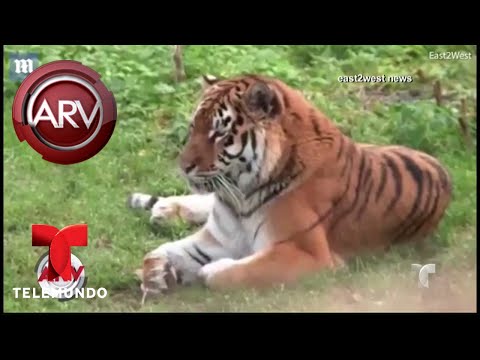 For more infomation >> Tigre atacó a su cuidadora en un zoológico | Al Rojo Vivo | Telemundo - Duration: 0:38.
  For more infomation >> Video: Closing arguments stern in Goodson disciplinary hearing - Duration: 1:47.
  For more infomation >> Con Heo Đất Remix - Nhạc Thiếu Nhi Vui Nhộn | Land Pig - Children's Musical | Story Kids Music [SKM] - Duration: 21:48.
  For more infomation >> 🌨 Noise of Rain: Sounds of Rain, Sound of Rain 💧 Rain with Lightning and Thunderstorms ⛈ Rain - Duration: 1:00:01.
  For more infomation >> Un dron que se salió de control casi provoca tragedia | Al Rojo Vivo | Telemundo - Duration: 0:42.
 For more infomation >> 'Somebody knows what happened.' Family pleads for closure in fatal hit-and-run - Duration: 1:46.

Không có nhận xét nào:
Đăng nhận xét